Clewell
Clewell Copper-Clad Art Pottery Vase, No. 461-26, Canton, Ohio, Early 20th Century, 7 Inches
Clewell Copper-Clad Art Pottery Vase, No. 461-26, Canton, Ohio, Early 20th Century, 7 Inches
Couldn't load pickup availability
This striking copper-clad pottery vase by Charles Walter Clewell (1876–1965) stands approximately 7 inches tall and features a bold, full-bodied baluster form with a wide globular shoulder tapering to a footed base, topped by a short rolled rim. The shape suggests the underlying ceramic blank may have originated from one of the prominent Ohio potteries Clewell regularly sourced, such as Weller or Owens.
The vase displays an exceptional range of patina that beautifully demonstrates Clewell's mastery of controlled oxidation. The upper body and rim exhibit warm, rich tones of burnished copper and reddish-brown, gradually transitioning down the lower body and foot into a vivid matte verdigris green — the natural result of copper oxidation that Clewell learned to stabilize and control by the 1920s. The interior rim also shows verdigris tones, adding depth and visual interest. This dramatic two-tone effect, shifting from warm copper to cool green, is among the most desirable patina combinations found on Clewell pieces.
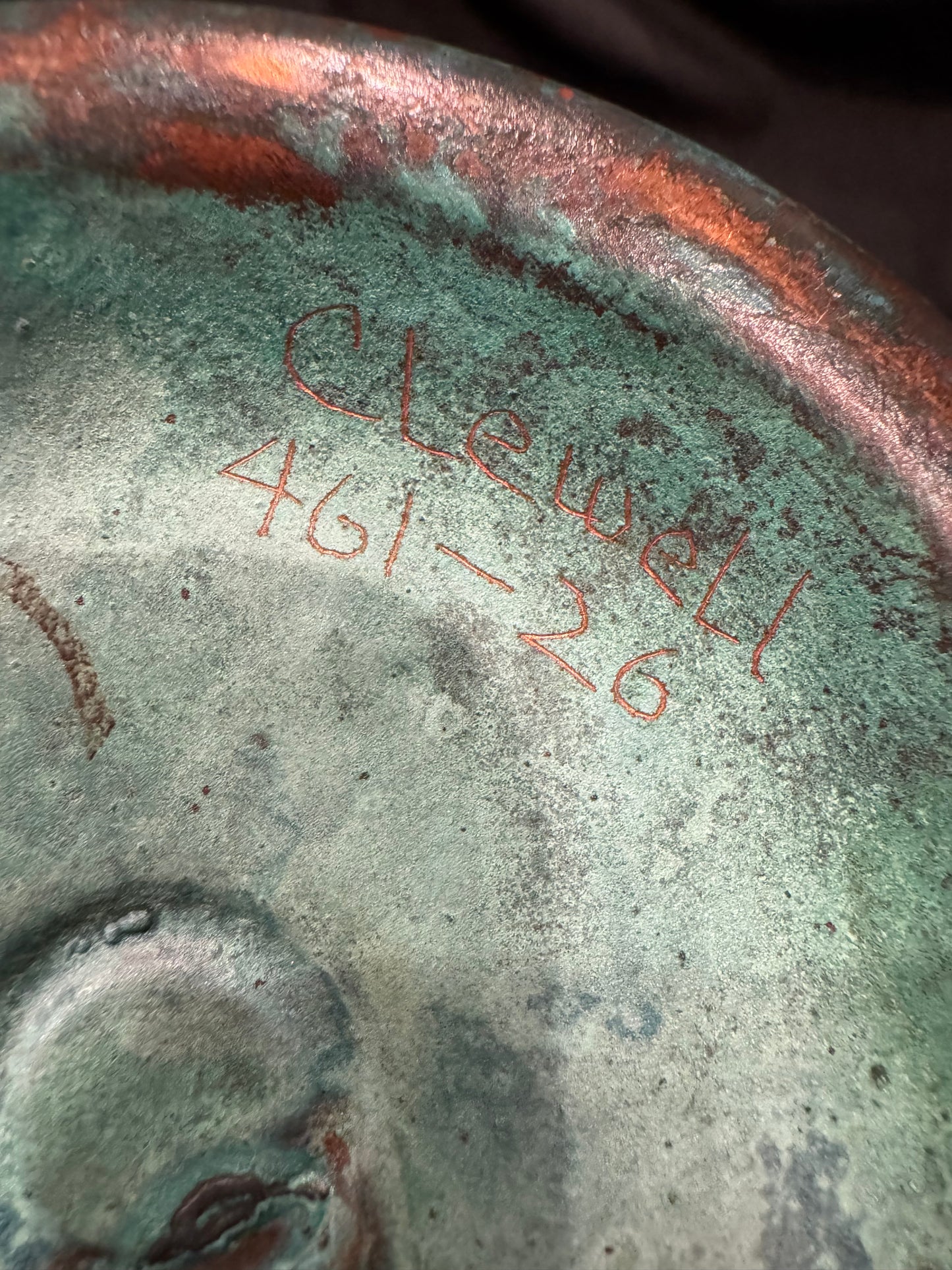
The underside is hand-incised "Clewell" with the model number "461-26," confirming its authenticity. The base displays a rich verdigris patina with copper showing through at the edges — a gorgeous detail that reveals the living quality of the metal surface.
Clewell was a skilled metalsmith rather than a potter Etsy, working from his Canton, Ohio studio beginning in 1906. He developed a proprietary and still-secret technique for completely sheathing ceramic vessels in copper, then coaxing the metal through controlled patination to achieve effects ranging from polished copper to deep verdigris. He never shared his methods, and the technique is believed to have been lost with his passing in 1965, making every authentic Clewell piece a unique and irreplaceable artifact of American Arts and Crafts ingenuity.
The vase is in good condition consistent with age, with the patina naturally evolved and intact. A handsome and collectible example of one of the most innovative artisans of the early twentieth-century American decorative arts movement.
Share